How to Improve Your CIBIL Score Before Applying (2026)
Planning to apply for a loan? Here is a step-by-step plan to improve your CIBIL score before applying: fix report errors, keep card usage under 30%, avoid new enquiries and know how long it takes.
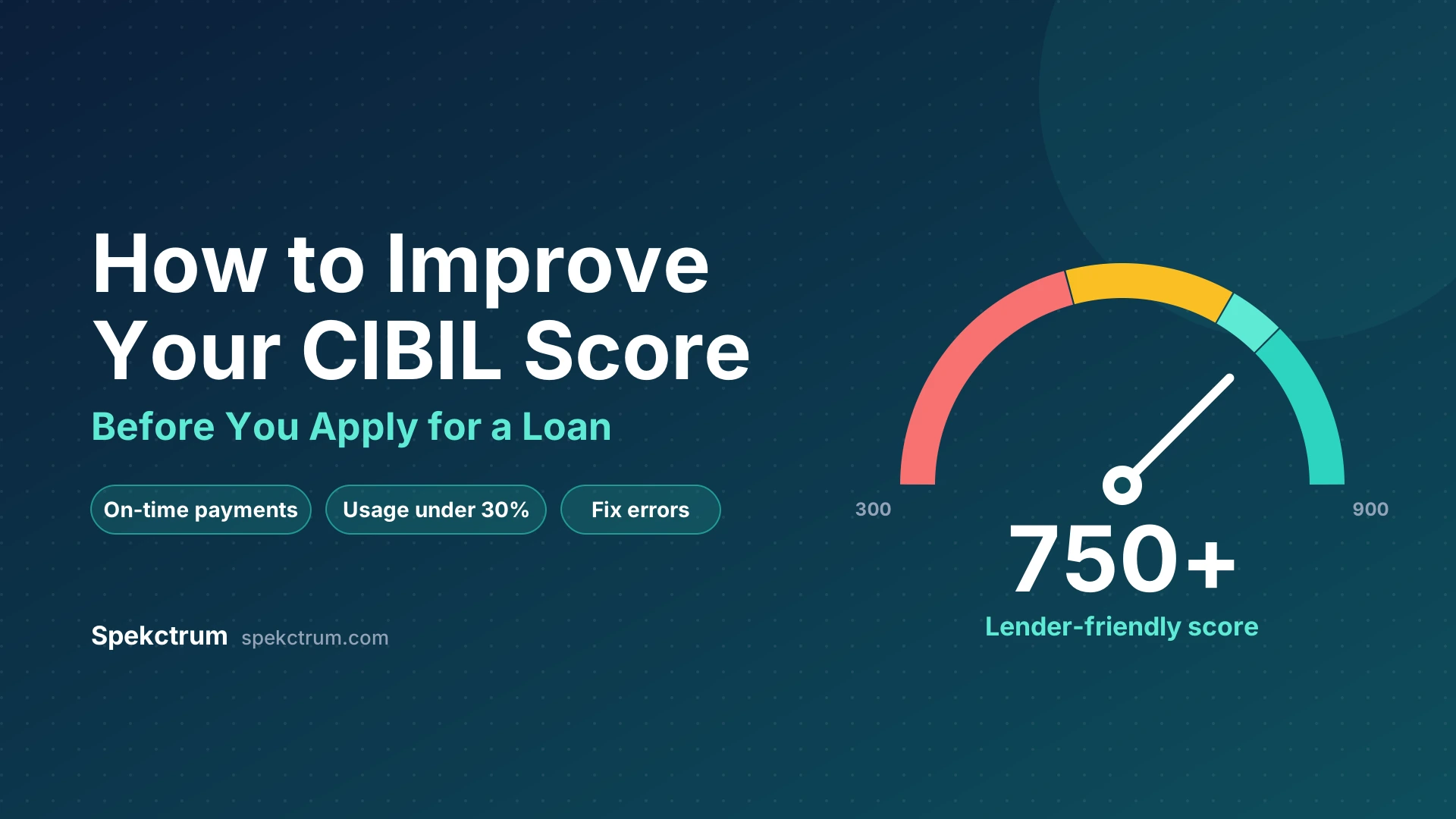
Your loan application is often decided before anyone looks at your salary slip. The lender checks your credit report first. If the number is low, you may get a rejection, or a loan at a higher interest rate.
The good news: if you plan ahead, you can improve your CIBIL score before applying. This guide gives you a clear, step-by-step plan you can start today, plus an honest idea of how long it takes.
Quick Answer: How to Improve Your CIBIL Score
Get your free credit report and fix any errors.
Pay every EMI and credit card bill on time. Set up autopay.
Keep credit card usage below 30% of your limit.
Do not apply for new loans or cards for at least 3–6 months.
Clear overdue amounts and keep old accounts open.
Check your score again before applying. Many lenders prefer 750 or above.
What Is a CIBIL Score and What Is a Good One?
A CIBIL score is a three-digit number between 300 and 900. It is created by TransUnion CIBIL, one of the four credit bureaus licensed by the RBI, using the repayment data that banks and lenders share. The closer it is to 900, the safer you look to a lender.
Score Range | What Lenders Usually Think |
|---|---|
750 and above | Strong. Easier approval and better interest rates |
700 to 749 | Good. Most lenders will consider you |
650 to 699 | Average. Approval is possible but terms may be costlier |
Below 650 | Weak. Rejection is more likely, so work on it first |
Different lenders use their own cut-offs, so treat these bands as a guide, not a guarantee.
What Affects Your CIBIL Score?
Payment history and credit usage matter the most. The table below shows what each factor means and what you can do about it. You will often see percentages for each factor on lender websites. Those are commonly quoted estimates, not an official formula, so focus on the habits.
Factor | What It Means | What to Do |
|---|---|---|
Payment history | Whether you pay EMIs and card bills on time | Never miss a due date. Use autopay |
Credit utilisation | How much of your card limit you use | Stay below 30% |
Length of credit history | How long your accounts have been open | Keep old accounts active |
Credit mix | A balance of secured and unsecured credit | Do not take loans just to change the mix |
New enquiries | How often you apply for new credit | Apply only when you really need to |
10 Steps to Improve Your CIBIL Score Before Applying
1. Pull Your Free Credit Reports
Under RBI rules, you can get one free full credit report every calendar year from each credit bureau. There are four bureaus: TransUnion CIBIL, Experian, Equifax and CRIF High Mark. If you have already used your free CIBIL report in 2026, the next one is available from 1 January 2027. Always download from the official bureau website. Checking your own score is a soft enquiry and does not lower it.
2. Look for Errors and Dispute Them
Check every line: loans you never took, wrong payment status, closed accounts shown as open, and wrong personal details. A wrong "overdue" mark can hurt as much as a real one.
Raise a dispute on the bureau's website. The rules give the lender 21 days and the bureau 9 days, 30 days in total. If it takes longer, you are entitled to ₹100 per day of delay as compensation. Keep screenshots and reference numbers.
3. Pay Everything on Time, Every Time
This is the biggest lever you have. Set autopay for at least the minimum amount due on every card and EMI. A single missed payment can stay on your report for a long time.
4. Bring Credit Card Usage Below 30%
Credit utilisation is the share of your card limit that you use. For example, if your limit is ₹2,00,000, try to keep your bill below ₹60,000 at the time the statement is made.
Pay part of the bill before the statement date.
Spread spending across more than one card if you have them.
Ask the bank for a higher limit, but only if you will not spend more.
5. Stop Applying for New Credit
Every loan or card application leads to a hard enquiry. Many applications in a short time make you look desperate for credit. A good rule is no more than one application in about six months.
6. Keep Old Accounts Open
An old credit card with a clean record adds to the length of your credit history. Closing it can shorten your history and also reduce your total limit, which pushes your utilisation up. If it has no annual fee, keep it and use it for a small bill now and then.
7. Clear Overdue Amounts
If you have overdue EMIs or card dues, clear them first. Then ask the lender to update your report. Where possible, pay the full amount.
The status on your report matters:
Closed or paid in full: best.
Settled: you paid less than you owed, for example ₹60,000 against a ₹1,00,000 loan. It is better than unpaid, but lenders see it as a warning sign.
Written off or overdue: the most damaging.
8. Check Joint Accounts and Guarantees
If you are a co-borrower or guarantor, the other person's missed payments can show up on your report. Ask them to stay on schedule, or check the status regularly.
9. Build a Healthy Mix Slowly
If you have no credit history, start small. A basic credit card used lightly and paid in full each month builds a record over time. Do not take a loan only to improve your mix.
10. Wait, Then Check Again Before You Apply
Score changes show up only after lenders report your latest data to the bureaus. RBI has moved lenders to faster reporting than the old monthly cycle, but your score changes only when your actual credit activity changes. Wait for your report to reflect your changes, then check it again before you apply.
Your 90-Day Plan
Timeline | What to Do |
|---|---|
Week 1 | Download reports from all four bureaus. List every error. Set up autopay. |
Weeks 2–4 | Raise disputes. Pay down card balances. Clear any overdue dues. |
Month 2 | No new applications. Keep card usage below 30%. Pay every bill on time. |
Month 3 | Review your reports again. Confirm errors are fixed. |
Months 4–6 | Keep the habits going. Apply when your score is near 750 or above. |
Mistakes That Hurt Your Score
Paying only the minimum due on credit cards every month.
Applying to many lenders at once to "see who approves".
Closing your oldest credit card.
Ignoring small unpaid bills or a forgotten card.
Believing "guaranteed score boost in 7 days" ads. Real improvement takes time.
Paying "credit repair" agents who promise to delete genuine negative entries.
How Long Does It Take to Improve a CIBIL Score?
It depends on where you start:
Small improvements often show in 3–6 months of steady on-time payments and lower card usage.
Bigger changes can take 12–18 months.
Serious negatives like defaults and settlements fade more slowly.
There is no safe way to jump from 600 to 750 in 30 days. Start early, ideally 6 months before you plan to apply.
Checklist Before You Apply for a Loan
My score is close to 750 or above.
I have checked all my credit reports and fixed errors.
I have no overdue payments.
My card usage is below 30%.
I have not applied for new credit in the last 3–6 months.
My existing EMIs leave enough room in my monthly income.
I have kept an emergency fund so I do not need to borrow for small shocks.
Ready to compare options? See our loan services or talk to the Spekctrum team.
What If Your Score Is Still Low?
Apply for a smaller amount, or wait a few more months.
Add a co-applicant with a strong credit record.
Consider a secured option, such as a loan against an asset you already own, and read the terms carefully.
Avoid borrowing from unregulated apps that charge very high interest.
Protect Your Credit From Big Shocks
Medical bills are one of the most common reasons people borrow in a hurry, and a sudden loan can strain your repayments. Having enough health cover helps. Read our guide on whether ₹5 lakh health insurance is enough. Also build an emergency fund. Our wealth planning services can help, and more guides are on the Spekctrum blog.
Frequently Asked Questions
"Credit score" is the general term. "CIBIL score" is the score made by TransUnion CIBIL, one of four RBI-licensed credit bureaus. The other three are Experian, Equifax and CRIF High Mark. Each bureau has its own model, so your numbers can differ a little. Lenders usually check the CIBIL score, but some use other bureaus.
Pay all dues on time, bring credit card usage below 30%, correct any errors on your report and avoid new applications. Real gains take a few months, not days.
Many lenders prefer 750 or above for better approval chances and interest rates. A score of 700 or more may still get approved, depending on the lender.
A missed or late payment can lower your score, because payment history is the most important factor. Pay the dues as soon as you can, then stay on time every month. The effect fades as your on-time record grows, but the late entry can stay on your report for years.
Paying on time and closing a loan in full is a good sign for lenders. You may see a small, temporary dip because an active account has closed, but a clean repayment record helps in the long run. Do not avoid closing a loan just to protect your score, especially if the interest is costing you money.
Both. Your score shows how you have handled credit in the past. Your income and existing EMIs show whether you can afford a new loan. A high score with too many EMIs can still get rejected, and a strong income with a weak score may mean a higher interest rate.
Yes, but it can be harder. If you are new to credit, your report may show no score, and lenders then look closely at your income, job stability and existing commitments. Start small: use a basic credit card for a few regular bills and pay it in full every month to build a record.
A drop does not always mean a missed payment. Common reasons are a spike in credit card usage, a recent loan or card application, closing an old account, or a wrong entry on your report. Download your credit report, check each line and dispute any error with the bureau.
Explore Personal & Business Loans
Related Articles
All Articles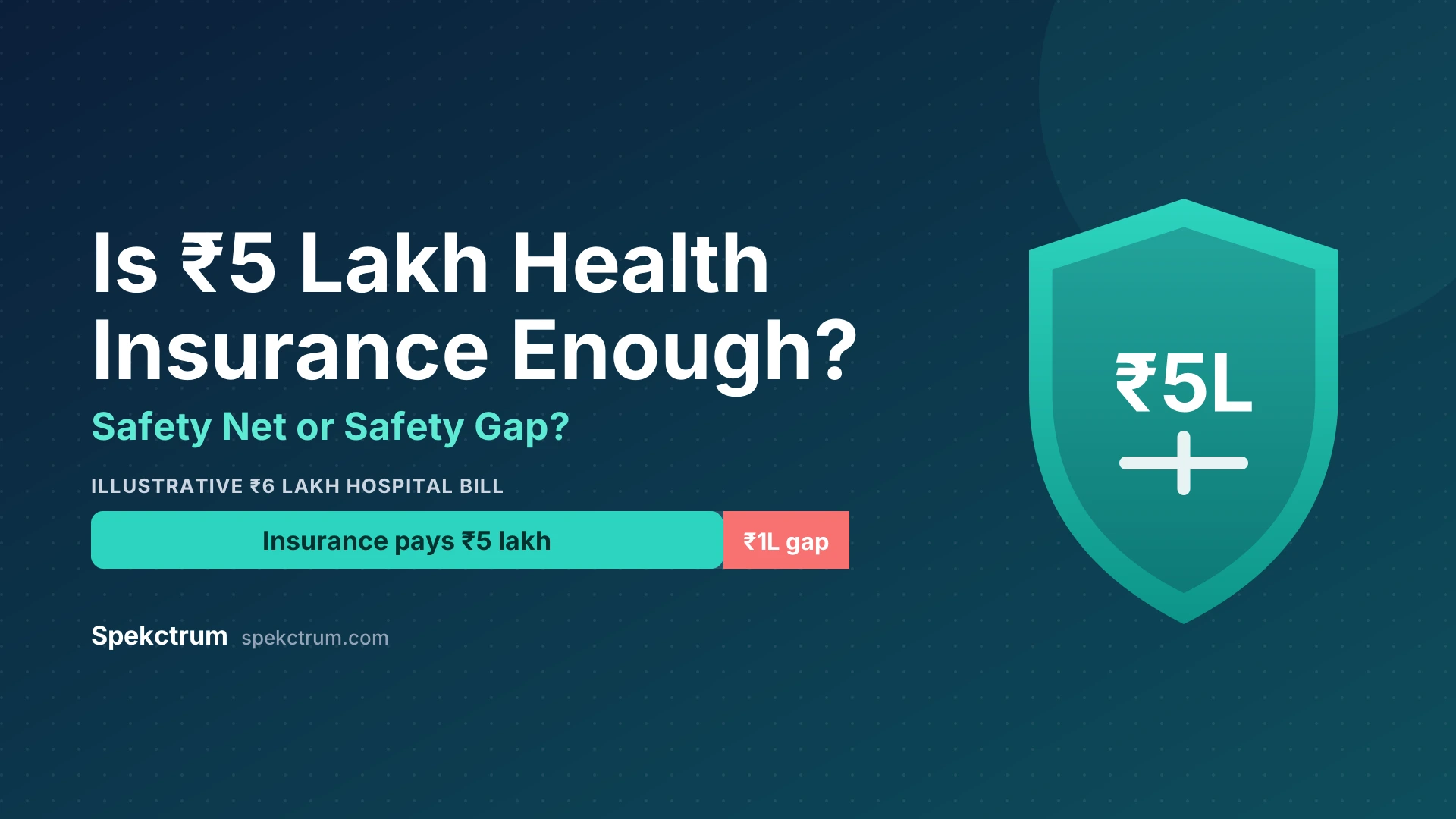 Insurance
₹5 Lakh Health Insurance in 2026: A Safety Net or a Safety Gap?
Is ₹5 lakh health insurance enough in 2026? See where a hospital bill goes, how co-pay and room rent limits cut your payout, and how a higher cover or super top-up closes the gap.